Everyone provides customer support, but can everyone deliver customer satisfaction?
Have you ever shopped in an online store and got the impression that the website knew what you want all along? As soon as you’ve looked at one item, it has recommended the ideal accessory for it right away.
That experience always makes you feel valued and well attended. Customer satisfaction should be considered as an absolutely crucial point in business management.
The idea of proactive live chat lies in making exactly that experience possible through a modern digital strategy. The need to wait until a dissatisfied customer looks for a help desk on their own will become history in the near future.
Modern intelligent digital triggers enable companies to provide assistance precisely when it is really required by the client. Proactively active customers with a proactive live chat can be a real game-changer, mainly when integrated with a robust customer support tool.
If you are new to the topic, start with our guide explaining what live chat is.
What is Proactive Live Chat?
Proactive live chat is essentially about knowing what your customers require even before they do. With technology, customers today are hesitant to seek help if they require any. Using proactive live chat services, businesses can become proactive in assisting their customers with necessary help.
It can sometimes happen that customers feel uncertain during their browsing, spend too much time in particular sections, and even feel that they want to leave without purchasing anything. In this case, proactive live chat services enable the agent to help such customers right away and make the whole shopping experience easier.
Reactive Vs Proactive Live Chat: What’s the Difference?
In order to know the importance of proactive customer support, one needs to look into how customer support operates in the traditional sense.
- Reactive Live Chat: You will have to look out for the live chat window, click on it, and wait for someone to respond once you ask a question.
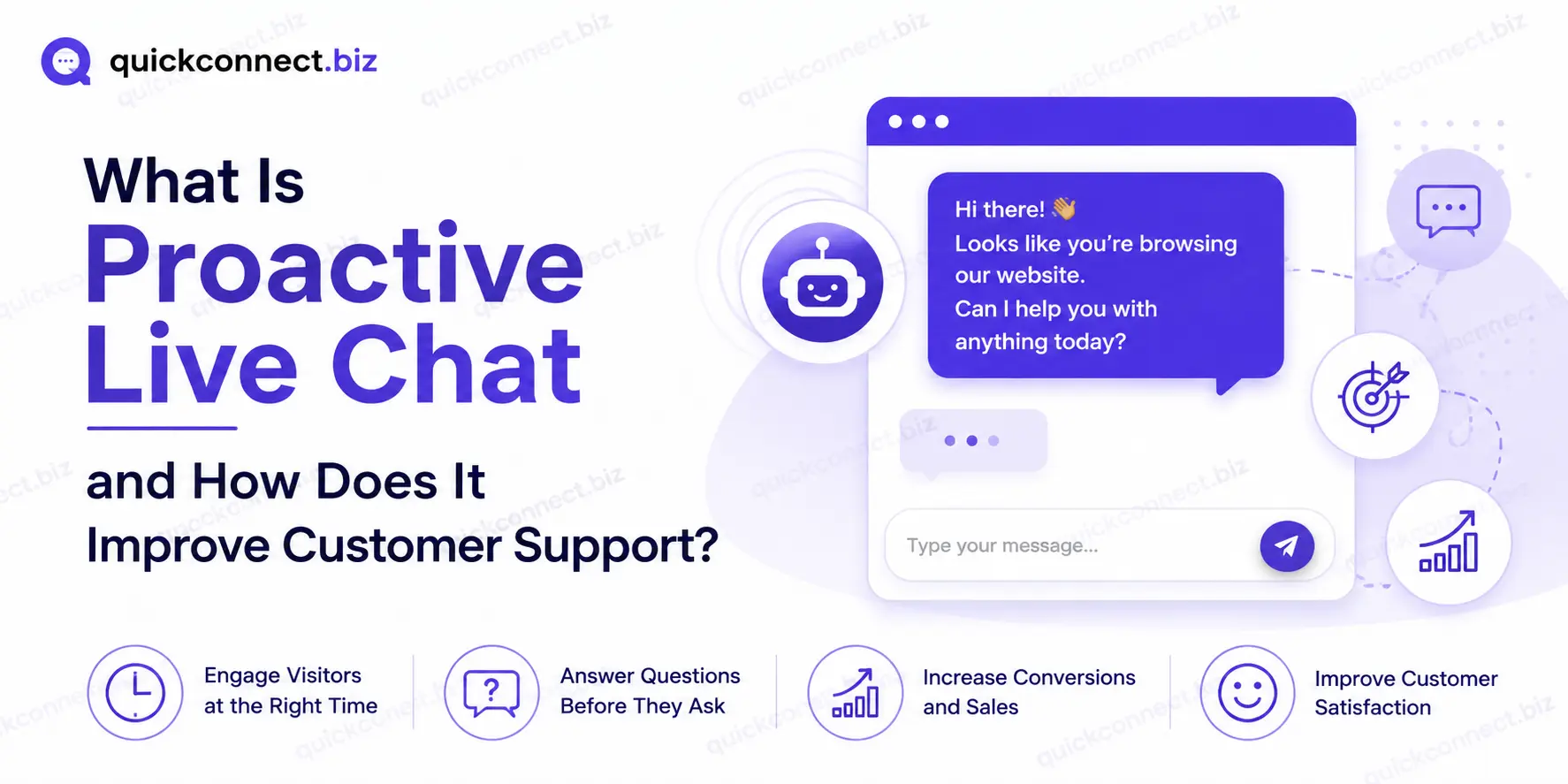
- Proactive Live Chat: Based on your activity pattern, the system initiates a live chat to assist you.
| Aspect | Reactive Live Chat | Proactive Live Chat |
| Initiation | Customers start the conversation when they need help. | Business initiates the conversation before the customer asks. |
| Response Timing | Support is provided only after a customer reaches out. | Support is offered at the right moment based on customer behavior. |
| Customer Effort | Customers must identify their issue and seek assistance. | Customers receive help without needing to actively ask for it. |
| Approach | Problem-solving after an issue arises. | Preventing issues before they become bigger problems. |
| Customer Experience | Helpful but depends on the customer taking action. | More seamless and convenient as support is offered proactively. |
| Use Case | Answering direct customer questions or resolving complaints. | Assisting customers during browsing, product comparison, or checkout hesitation. |
| Impact on Sales | Helps solve problems that may affect purchase decisions. | Increases conversions by engaging customers before they leave. |
| Example | A customer clicks the chat icon to ask about delivery charges. | A chat prompt appears when a customer spends too long on the checkout page. |
This is similar to the difference between a salesperson sitting behind a counter waiting to be asked for help when you look lost. In contrast, the attentive salesperson offers their assistance once they realize that you are unsure of yourself.
Let’s consider a practical example of pro-active chat on an online platform. Suppose you want to purchase a smartphone. After comparing the various features and reading the reviews, you still cannot choose from the two available types, keeping you indecisive about which one to buy.
Here comes the proactive chat that initiates a conversation by asking a question, like “Need some help in making your choice?” This initiates immediate support for the consumer. The user can ask any specification or compare features; the consumer has the freedom to continue chatting or close it depending on whether they need help or not.
How Proactive Live Chat Works
An effective proactive support has no random triggers; it’s algorithmic. Proactive live chat triggers monitor user activity and automatically send a message following specific rules, or “triggers.”
1. Time Spent On Page (Consideration trigger)
A customer spending more than 60 seconds on an extensive enterprise pricing page is not simply surfing through. He’s trying to calculate the deal. The following question will prevent him from dropping off due to confusion: “Need some assistance in choosing the right plan that fits your team’s needs?”
2. Large Purchase Amount + Lack of Activity (Checkout trigger)
A user who spends over two minutes on your site’s checkout page and has added items in his shopping cart worth $200 has most likely become hesitant about his purchase. Most of the time, he is hesitating because of surprise at the shipping costs or concerns regarding his payment security. Sending him a short message about delivery periods might be all you need to secure your conversion.
3. High-Intent Pages Visit Frequency
If a user visits your documentation or services pages more than three times within 48 hours, he has moved beyond just considering his purchases. It means he’s in the purchasing decision-making stage.
Once a trigger fires, the message itself matters too. See these live chat welcome messages for examples you can use based on different customer situations.
How Does Proactive LiveChat Improve Customer Support
Proactive live chat transforms customer support by creating smoother and more personalized customer interactions. Here are some key ways it improves customer support:
1. Provides Immediate Assistance
According to the Zendesk Benchmark Report (2015), live chat was rated as the most satisfied mode of customer support service, with a success rate of 92%, beating other channels like email, telephone, and social media. This way, the clients get help right away without wasting too much time.
2. Decreases Customer Frustration
Proactive live chat can help avoid problems caused by customer frustration. If the moment arises where clients could be experiencing some confusion or difficulties navigating through the process, companies will be able to assist immediately, preventing frustration from happening. Thus, proactive live chat allows for providing customers with a seamless and smooth browsing experience.
3. Provides Personalized Support
The advantage of proactive live chat for companies is that it enables delivering personalized customer service. As soon as a customer starts looking at several items, spends more time than usual on a particular product or returns to a specific item again and again, live chat agents will be able to give a relevant response and provide proper assistance.
4. Speeds Up Problem Resolution
Customers can quickly get answers to their questions, helping them make decisions faster without unnecessary waiting. This increases the purchasing rate as well/. The DigitalResearch Customer Service Benchmark reported that 31% of consumers regularly use live chat as a customer service touchpoint.
5. Enhances Customer Satisfaction
When customers get help immediately and at the time when it is required, the whole process becomes more comfortable for them. Thanks to proactive live chat, businesses can resolve the matter instantly, cut off the waiting time, and make sure their clients get necessary support all along the way.
6. Prevent Missed Opportunities
There are many situations when customers simply do not do something on websites due to unanswered questions or some concerns. The purpose of proactive live chat is to notice these instances when a customer needs help and provide this help at once.
This same approach can turn high-intent visitors into prospects through live chat lead generation
7. Establishes Customer Trust & Confidence
Whenever customers are welcomed instantly with all the help they need, they start feeling confident in the fact that they are taken seriously. Therefore, they would certainly feel satisfied with this approach.
See how these techniques fit into a broader live chat support strategy for improving customer service across the full support journey
Best Tips for Proactive Live Chat
- Delay the Chat Implementation: Wait for 15-30 seconds so that the users can explore the page, and then initiate the chat process.
- Categorize Your Users: Customize your chats based on visitor behavior, history, and browsing tendencies.
- Don’t Overdo It: Make sure to use a helpful and friendly language instead of intimidating and sales-oriented prompts.
- Combine AI and Humans: Utilize artificial intelligence to resolve routine queries while making sure to shift the questions to human agents for complicated questions.
- Pay Attention to Timing: Initiate proactive chats only when the user shows signs of reluctance.
- Think About Your Users: Be helpful with your proactive chats without annoying your customers.
These recommendations should also be incorporated into your broader live chat best practices.
Proactive Live Chat: The New Standard of Customer Experience
Proactive live chat is really a culture change because it shifts your online retail experience from being passive and transactional to being actively hospitable.
Because it predicts problems and then offers quick fixes, tools such as QuickConnect help companies establish instant trust and rapport. In today’s competitive environment, when products and prices are easily copied, a flawless and intuitive user experience is what sets companies apart from their competitors.
Shifting from reactive customer support to proactive support is much like shifting from having an employee who avoids eye contact while working behind the counter to an employee who sees that you’re having difficulty and helps out.