Think about the last time a business truly wowed you. Maybe it was a quick response when you needed help urgently, or someone going out of their way to make your experience smooth. Whatever it was, it stuck with you and that’s the power of great customer service.
Here’s the hard truth: customers today have more choices than ever. If your service isn’t good, they’ll quietly leave and never come back. In fact, research from Salesforce shows that 94% of consumers say they are more likely to buy again from a brand that gave them a great service experience. That’s not a small number, that’s nearly everyone.
The good news is you don’t need a massive team or a huge budget to deliver exceptional customer service. You just need to look at what the best brands are doing and adapt those strategies for your own business.
In this post, we’ve pulled together 15 real customer service examples from well-known companies, along with clear takeaways you can put into practice today.
What Makes Customer Service “Great”?
Before we get into the examples, let’s quickly cover what good customer service actually looks like today.
It’s not just about being polite. Great customer service means resolving issues quickly, being where your customers are, making them feel valued, and increasingly using smart tools to make every interaction smoother. A few key qualities stand out: responsiveness, empathy, consistency, personalization, and problem-solving.
With that foundation in place, let’s look at brands that are nailing it.
15 Customer Service Examples You Can Learn From Right Now
1. Zappos: Going Way Beyond the Expected
Zappos has one of the most legendary customer service stories in business. When a best man’s wedding shoes were delivered to the wrong address the night before the wedding, Zappos didn’t just apologize, they overnighted a new pair for free and upgraded him to a VIP account.
That’s not a policy, that’s a culture. Zappos empowers every team member to do what it takes to make a customer happy, no questions asked.
What you can do: Give your support team the freedom to make decisions on the spot. When agents have to escalate every little thing, it slows everything down and frustrates customers. Trust your people to handle it.
2. Chewy: Sending Handwritten Notes (and Flowers)
Online pet retailer Chewy is famous for going personal in an industry that’s mostly transactional. When customers mention that a pet has passed away, Chewy sometimes sends a handwritten sympathy card and in some cases, a bouquet of flowers.
These are small gestures that cost very little but create an emotional connection that no discount code can replicate.
What you can do: Train your team to read conversations carefully and respond to the human moments. A kind word at the right time costs nothing but means everything.
3. NetHunt CRM: Personalized Welcome Videos
When new users sign up for NetHunt CRM, they receive a personalized welcome video from their dedicated customer success manager. The CSM introduces themselves, welcomes the customer by name, and begins building a real relationship from day one.
This kind of personal onboarding makes new customers feel seen rather than like another number in a database.
What you can do: Consider adding a personal touch to your onboarding process even a quick voice note or a personalized email goes a long way. First impressions set the tone for the entire relationship.
4. Adobe: Proactive Social Media Support
Adobe’s customer support team actively monitors social media and responds to users who post questions, problems, or frustrations even when those people haven’t tagged the company directly. They jump into conversations, offer solutions, and make it clear that they’re paying attention.
This kind of proactive support turns potential complaints into public displays of great service. Other people watching that interaction also see how Adobe handles things.
What you can do: Set up keyword alerts for your brand name, product names, and common problem phrases on social media. Responding quickly in public builds enormous trust. Tools like social media automation can help you monitor and manage these conversations from one place.
5. Lexus: Making Service Feel Like Hospitality
Lexus dealerships approach every service visit like a luxury hospitality experience. Customers receive complimentary car washes, refreshments, and loaner vehicles. Staff have access to centralized profiles so they can recall individual preferences without being asked. And every visit ends with a digital vehicle health report, with follow-ups automatically scheduled based on driving patterns.
The result? Lexus earned an American Customer Satisfaction Index score of 87 in 2025, one of the highest in the automotive industry.
What you can do: Think about how you can turn routine customer touchpoints, a support call, a check-in email, or a post-purchase follow-up into something that feels genuinely thoughtful rather than automated and generic.
6. Ritz-Carlton: Empowering Every Employee to Fix Problems
The Ritz-Carlton gives every single employee, not just managers, the authority to spend up to $2,000 per guest, per incident, to resolve a problem. No approvals needed, no forms to fill out.
This trust-based model is why the Ritz-Carlton consistently appears at the top of hospitality satisfaction rankings. Guests never feel like they have to fight for fair treatment.
What you can do: Set a clear empowerment policy for your team. Define what decisions they can make independently and what the spending limit is. When customers interact with someone who can actually help them on the spot, they feel respected.
7. Skyscanner: Turning a Mistake into a Moment of Delight
A customer once noticed a glitch on Skyscanner’s website that showed a 47-year layover. Instead of quietly fixing the bug and hoping nobody noticed, Skyscanner’s social media team leaned into it with humor, asking the customer what they planned to do during their 47-year wait.
The exchange went viral. It was playful, human, and showed that there was a real person on the other side of the screen.
What you can do: When something goes wrong, don’t just go into damage-control mode. Sometimes a bit of humor, transparency, and humanity does more for your brand than a perfect, polished apology statement ever could.
8. Ace Hardware: Local Knowledge, Community-Level Service
Ace Hardware operates as a locally owned cooperative. Each store is stocked based on neighborhood needs not corporate mandates. Employees are encouraged to know their community and offer advice that actually fits the local context. This earned Ace Hardware a Newsweek #1 ranking in its category for 2026.
What you can do: Don’t try to be everything to everyone. Know your customers specifically their industry, their common challenges, their goals and tailor your service accordingly. Generic support feels like no support at all.
9. Apple: Consistency Across Every Channel
Apple is known for delivering a consistent experience whether you’re in a physical store, chatting online, or calling their support line. The Genius Bar model created a new standard for in-person technical support, knowledgeable, friendly, appointment-based, and no-pressure.
More importantly, every interaction follows the same tone and quality standards, so customers know exactly what to expect no matter how they reach out.
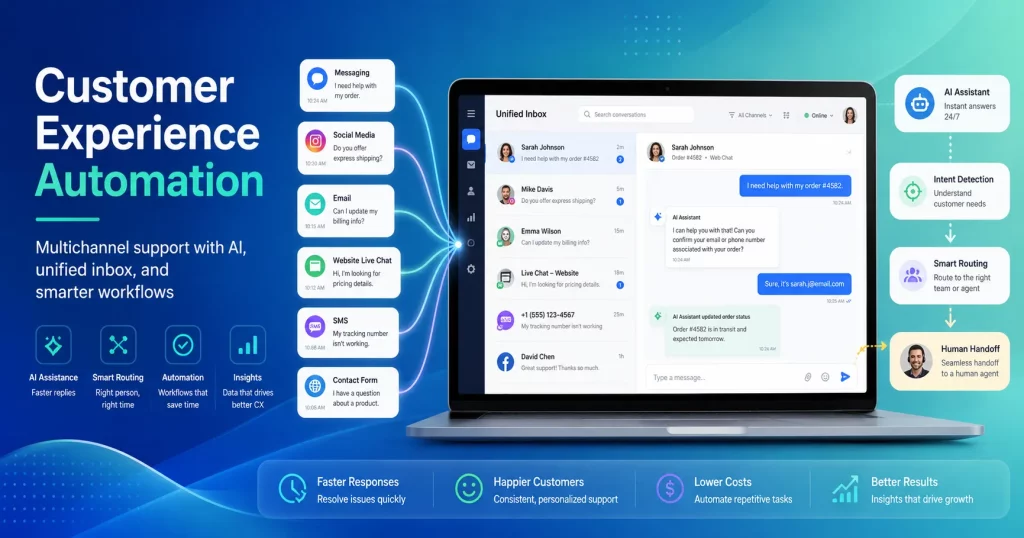
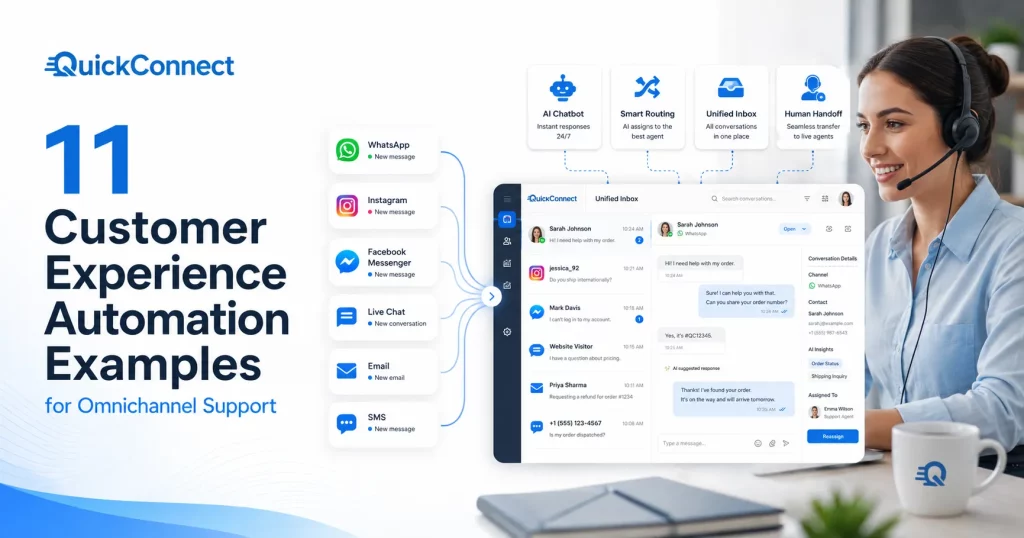
What you can do: Create consistent service standards across all your customer-facing channels. Whether someone contacts you via WhatsApp, Instagram DM, email, or live chat, the experience should feel unified. QuickConnect’s unified inbox is built for exactly this — bringing all your customer conversations into one place so nothing slips through the cracks.
10. Dapper Labs: Using AI to Scale Without Losing the Human Touch
Dapper Labs implemented conversational AI chatbots that managed over 70% of incoming support requests. This freed up their human agents to focus on complex, high-value interactions the ones where empathy and judgment really matter.
The result wasn’t just faster response times. It was a significant increase in customer lifetime value because human agents could focus on building real relationships instead of answering repetitive questions.
What you can do: AI doesn’t replace your team, it makes your team better. Automate the repetitive stuff so your people can focus on the conversations that actually need a human. QuickConnect’s AI Bot can handle common questions 24/7 while passing complex issues directly to your team with full context.
11. Chick-fil-A: Making “Thank You” Feel Genuine
Walk into any Chick-fil-A and you’ll notice something different from other fast food chains. When you thank an employee, they don’t say “no problem” or “sure.” They say “my pleasure.” It sounds small, but it’s part of a deliberate culture of warmth and genuine appreciation.
That small phrase reflects a deeper commitment to making every customer interaction feel respectful and human not transactional.
What you can do: Look at the language your team uses in customer interactions. Small word choices signal a lot about how much you value the person you’re talking to. Work on scripts and tone guides that reflect genuine warmth rather than robotic formality.
12. Five Below: Understanding Your Customers Better Than They Know Themselves
Five Below, a discount retail chain, has built a loyal customer base by deeply understanding what their shoppers care about trendy products at prices that feel like a win. They jump on online trends quickly and build campaigns around the things their core audience is already talking about.
This kind of customer understanding lets them stay one step ahead without needing to overspend on marketing.
What you can do: Spend time actually listening to your customers in reviews, in support tickets, in social media comments. The insights are there. Use them to shape both your product decisions and your service approach.
13. Amazon: Speed as a Service Standard
Amazon set a precedent that the entire e-commerce world now has to live up to: fast, reliable, frictionless. From one-click ordering to next-day delivery to instant refunds, Amazon has made speed a core part of its customer service identity.
Customers now expect this level of efficiency everywhere. Sixty-six percent of people say that valuing their time is the most important thing a company can do in an online experience.
What you can do: Look at where your customers are waiting. Is it for a response? For a resolution? For an update on their order? Find the biggest bottleneck and fix it. Even shaving a few minutes off your average response time can meaningfully improve customer satisfaction. QuickConnect’s customer support platform is designed to help you respond faster across all your channels without adding more headcount.
14. Spotify: Proactive Communication During Problems
When Spotify experiences outages or technical issues, they don’t go quiet and hope nobody notices. They post updates in real time, acknowledge the problem openly, and keep customers informed throughout the fix. Their social accounts become active status update channels during any significant incident.
This transparency earns trust even in moments of failure.
What you can do: Create a communication plan for when things go wrong. Customers are far more forgiving when they feel informed than when they feel ignored. A proactive message that says “we know about this and we’re working on it” does more for loyalty than a silent fix ever will.
15. Multichannel Champions: Meeting Customers Wherever They Are
The brands consistently winning at customer service in 2026 share one thing in common: they show up where their customers are. That means phone, email, live chat, WhatsApp, Instagram DMs, Facebook Messenger, and SMS, sometimes all of the above.
Customers don’t want to change platforms to get help. They want to message you the same way they message a friend.
What you can do: Expand your support channels to include the platforms your customers actually use. You don’t have to manage them all manually; tools like QuickConnect’s multichannel campaigns and messaging integrations make it possible to stay present across SMS, WhatsApp, Instagram, and Facebook without burning out your team. Also, check out live chat support to understand why live chat is now a baseline expectation, not a bonus feature.
The Common Thread in All Great Customer Service
Looking at all 15 examples, a clear pattern emerges. The best brands aren’t doing anything magical — they’re doing normal things with unusual consistency and care.
They listen. They respond fast. They empower their teams. They use the right tools. They treat customers like people, not tickets.
Whether you’re a small business or a growing startup, you can take any one of these examples and start applying it this week. You don’t need to do all 15 at once. Pick the one that resonates most with your customers and your team, start there, and build from it.
If you want to read more about the different ways businesses deliver support, our guide on types of customer service breaks down the full spectrum from self-service to AI-powered support so you can figure out what mix works best for your business.
How to Start Improving Your Customer Service Today
Here’s a simple action plan to get moving:
Step 1: Audit your current response times. How long does it take you to respond on each channel? Start measuring, because you can’t improve what you don’t track.
Step 2: Identify your highest-volume support questions. These are prime candidates for automation or a knowledge base so customers can self-serve.
Step 3: Pick one channel to improve this month. Don’t try to overhaul everything at once. Focus on one area, your Instagram DMs or your live chat — and make it excellent.
Step 4: Use tools that help you scale. As your business grows, manually managing every conversation becomes unsustainable. QuickConnect brings together live chat, AI-powered bots, social media automation, and multichannel messaging in one free platform so you can deliver great service without burning out.
Final Thoughts
Great customer service isn’t a department, it’s a mindset that runs through your entire business. The brands in this list didn’t get great at service by accident. They made it a priority, gave their teams the tools and authority to deliver, and stayed consistent over time.
The good news is that you don’t need to be Zappos or Apple to make your customers feel valued. You just need to show up, respond quickly, and care enough to go a little further than expected.
Start with one of these examples today. Build the habit. And watch how it changes the way customers talk about your brand.