Table of Contents
- 1. Why Your Sales Funnel Depends on Instant Response
- 2. The AI Revolution: Conversational AI vs. Basic Bots
- 3. Integration is the Key to Agent Performance
- 4. Technical Features That Actually Matter
- 5. Metrics: Measuring Success Beyond the Chat
- 6. Pricing Models and Hidden Costs
- 7. Improving the Customer Experience
- 8. Implementation: How to Get Started
- Conclusion
If you have spent even five minutes managing a website in today’s market, you have felt the pressure. You see the website visitors landing on your page. You see them clicking around your products. Then, just as quickly as they arrived, they vanish. Most of the time, they leave because they had a simple question and nobody was there to answer it.
The “Contact Us” form is effectively a black hole. These days nobody wants to send an email into a void and wait three days for a reply that might not even solve the problem. This is why live chat software has shifted from being a “nice to have” feature to a mandatory part of any marketing strategy.
But here is the catch. If you pick the wrong live chat widget, you might actually make things worse. Clunky, slow, or poorly integrated chat software can frustrate your customers and burn out your team. Before you commit to a subscription, you need to look past the marketing fluff. You need to know exactly what makes a live chat solution work for your specific business goals.
This guide is a deep dive into the technical and strategic considerations you must weigh before choosing the best live chat software to grow your business.
1. Why Your Sales Funnel Depends on Instant Response
Most people think of live chat as a support tool. That is a very narrow way of looking at it. In reality, your chat tool is a vital part of your sales funnel.
Think about the customer journey. A lead finds your site through a search engine. They are interested, but they are skeptical. They have one specific question about how your live chat integrate capabilities work with their existing CRM. If they can get that answer in 30 seconds via a chat widget, they might buy right then. If they have to wait, they will likely head over to a competitor.
Reducing Response Time to Zero
The most important metric in digital sales is call to action speed. The longer a prospect waits, the colder they get. High-quality live chat app allow you to intelligently route queries so the right person answers at the right time. By reducing the response time, you are essentially striking while the iron is hot.
Using Proactive Chat to Qualify Leads
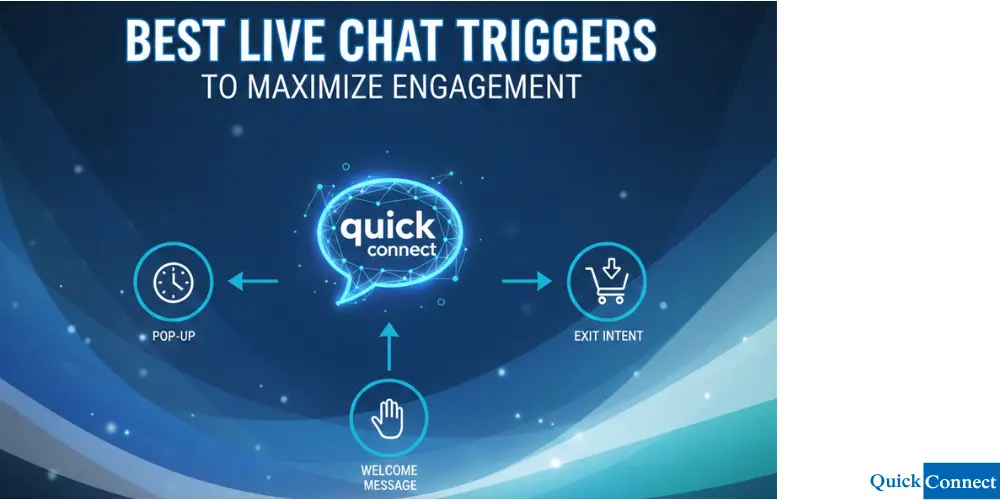
You should not wait for the customer to speak first. A modern live chat setup uses proactive messaging to engage people based on their behavior. If someone is lingering on your pricing page, the chat window can trigger a message: “I see you are looking at our pro plan. Would you like a quick breakdown of the premium features?”
This is how you qualify leads without spending a dime on extra ads. You are simply maximizing the value of the traffic you already have.
2. The AI Revolution: Conversational AI vs. Basic Bots
There is a massive difference between a “bot” and conversational AI. You have probably interacted with a bad bot before. You ask it a question, and it gives you a list of three buttons that have nothing to do with your problem. That is not helpful. It is annoying.
Leveraging Machine Learning
When you look at live chat software, ask about their machine learning capabilities. A smart system learns from your knowledge base and previous customer conversations. Over time, it gets better at answering questions accurately.
Handling Common Questions
Your team should not be wasting their lives answering, “What are your hours?” or “Where is my package?” A live chat platform with strong conversational AI and automated chat handling skills can manage these common questions with 100% accuracy. This keeps your customers happy because they get an instant answer, and it keeps your agents happy because they can focus on complex issues.
3. Integration is the Key to Agent Performance
Your live chat tool should not be an island. It needs to be the heart of your communications platform. If your agents have to manually type a customer’s name into a separate ticketing system, you are wasting time and money.
CRM Integration
A deep CRM integration is non-negotiable. When a chat starts, your agent should immediately see the customer’s profile. They should see past chat sessions, previous purchases, and even their last interaction on social media. This allows for a truly personal customer experience. You move away from “How can I help you?” and toward “Hi Sarah, are you still having trouble with that order from Tuesday?”
The Power of the Team Inbox
Managing customer communications across social media, WhatsApp, and web chat is a nightmare if you are using five different apps. Look for a feature set that includes a unified team inbox. This allows your sales teams and support staff to see everything in one place. Whether a message comes from a live chat on your site or a DM on Instagram, it lands in the same spot.
4. Technical Features That Actually Matter
Many companies will try to sell you on fancy bells and whistles. Ignore them. Focus on the core technical features that drive customer engagement and agent performance.
Canned Responses
Don’t let the name fool you. Canned responses, also known as live chat scripts, are not about being robotic. They are about being fast. They are pre-saved templates for your most frequent interactions. A good live chat setup allows agents to customize these on the fly, ensuring a fast but personal customer touch.
Chat Transcript and History
Every customer interaction should be recorded. A searchable chat transcript is a goldmine for training. If a sales rep closed a huge deal, you want to read that transcript to see exactly what they said. If a customer is angry, you need to see the history to understand where the customer support solutions failed.
Screen Sharing and Co-browsing
Sometimes, words are not enough. If you are selling a complex software product, screen sharing is a life-saver. Being able to see the customer’s screen (with their permission) allows you to solve complex issues in minutes rather than hours of back-and-forth messaging.
5. Metrics: Measuring Success Beyond the Chat
If you are going to grow your business, you need data. You cannot rely on “gut feelings.” You need detailed reports that show you the key metrics of your live chat software performance.
Essential Data Points:
- Chat Volume: When are people messaging you? If your chat volume peaks at 10 PM, you might need to adjust your staffing or lean harder on your AI bot.
- Wait Times: How long are people sitting in the queue? High wait times lead to high “bounce” rates.
- Agent Performance: Who is closing the most deals? Who has the highest customer satisfaction scores?
- Sales and Lead Conversion: How many of these chat sessions actually turned into a sales lead?
A high-quality live chat platform will present this data in a way that is easy to understand, allowing you to tweak your marketing strategy in real time.
6. Pricing Models and Hidden Costs
When you choose live chat widget, the price tag on the website is rarely the whole story. You need to look at the pricing model carefully.
Per-Agent vs. Per-User
Some live chat solutions charge by the number of agents. This is fine if you have a small, dedicated team. Others charge by the number of website visitors or the number of chats. If you have a high-traffic site, the “per-chat” model can become incredibly expensive very quickly.
Premium Features and Add-ons
Be wary of the “entry-level” price. Often, essential things like CRM integration, detailed reports, or social media connectivity are locked behind a “Pro” or “Enterprise” wall. Always ask for a full list of what is included in the feature set before you sign a contract.
7. Improving the Customer Experience
At the end of the day, your live chat software exists for one person: the customer. If the chat window is hard to find or if the chat widget covers up important information on your mobile site, the customer experience will suffer.
Aesthetics and Customization
Your chat apps should look like they belong to your brand. You should be able to customize the colors, the fonts, and the icons. A clunky-looking live chat box makes your site look untrustworthy.
Managing Expectations
If your team is offline, be honest about it. Use your chat software to set clear expectations. “We are currently away, but our AI bot is here to help. Or, leave your email, and we will get back to you within 2 hours.” This is much better than letting a customer wait in a silent queue.
The Role of Human Touch
Even with the best conversational AI, some problems need a human. Make sure it is easy for a customer to “escalate” to a real person. Nothing makes a personal customer feel less valued than being trapped in a loop with a bot that doesn’t understand them.
8. Implementation: How to Get Started
Buying the software is only 20% of the battle. The other 80% is implementation.
- Set Your Goals: Are you looking for lead generation or better support?
- Train Your Team: Don’t just throw the chat tool at your sales teams. Teach them how to use canned responses and how to intelligently route chats.
- Build Your Knowledge Base: The AI is only as good as the information it has. Feed it your best FAQs.
- Test and Tweak: Use your detailed reports to see what is working. If people are dropping off after the first message, change your greeting.
Conclusion
Choosing the right live chat software is a major decision for any modern business. It affects your sales and lead numbers, your agent performance, and most importantly, how your customers feel about you. That’s why businesses are turning to platforms like QuickConnect that deliver on all fronts.
Focus on integration, prioritize response time, and don’t be afraid to lean on conversational AI to handle the heavy lifting. When you find the right balance between technology and the human touch, you don’t just solve problems. You create a competitive advantage that helps you grow your business for years to come.