Customers desire personalized service but prefer not to make phone calls or wait for email responses.
A simple solution? Live chat support.
This tool enables support representatives to reply to customers instantly and add a personal touch to resolving issues. The support teams can also use conversation data to further improve their service.
What Is Live Chat Support?
Live chat support is a service that allows customers to receive assistance through instant messaging systems on a one-to-one basis, typically via a company’s website.
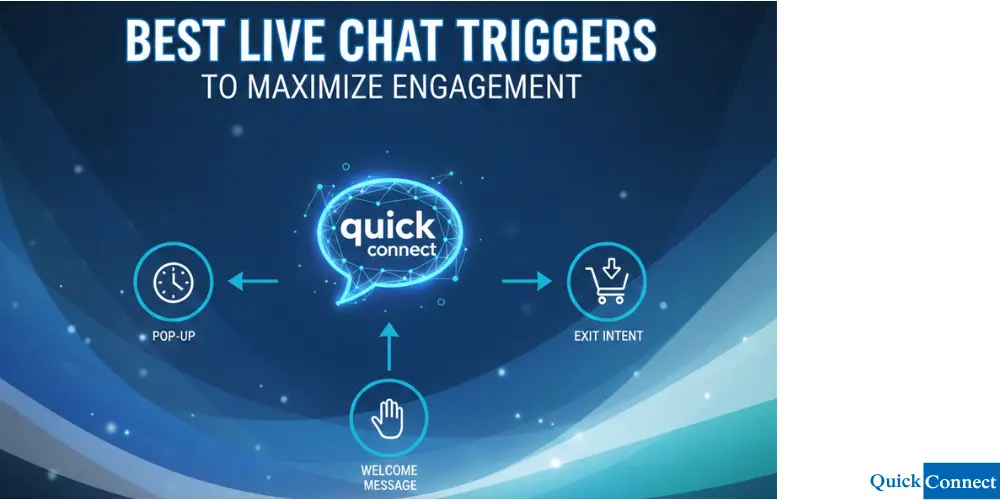
There are different ways live chat can be implemented. It might involve a proactive pop-up appearing on your screen, asking if you need assistance. Clicking on it connects you to a live representative.
Alternatively, customers can initiate a live chat when they require help. Many companies’ websites have a button, often located at the bottom right corner of the page, where users can click to speak with an agent.
Live chat serves as an online communication tool that enables businesses to interact with website visitors or social media followers in real-time. It’s set up through a code or added as a plugin to websites and other communication channels.
This chat option is an excellent alternative to phone calls or emails. Website visitors simply need to type their message in the chatbox and hit send.
Live chat can replicate the in-store experience online by actively engaging visitors and boosting their interaction with the business.
How Does Live Chat Support Work?
Suppose this: a customer who had been shopping in your online store late in the night has a question regarding a product but does not want to wait until they receive an email response. Instead, they are connected with an answer in seconds, clicking on a chat window, and typing their question.
A live chat application will be helpful not only as a self-service tool but also in processing customer feedback, making sales, and receiving valuable feedback. Live communication ensures businesses are on par with the requirements of the audience.
Live chat support software has the ability to open automatically with an invitation to chat if the customer opens one of the pages, just like a friendly virtual assistant asking, Need help with anything? The customers are also able to use a chat at any time, clicking a button, which is usually in the lower part of the screen. They get connected with support agents who are ready to help once they click.
Live chat is easy to establish, yet placement in your customer service strategy needs a bit of planning to make it a permanent entity. You will have to decide when and where proactive chats can be used; you will also have to train your team to answer inquiries efficiently and make the experience personal.
Benefits of Live Chat Support for Customers
What are the benefits of live chat support? Here are 8 benefits of live chat for customers:
1. Continuous 24/7 customer support
One of the key benefits of live chat for customer service is its ability to provide users with constant assistance whenever needed. Customers can have real-time conversations with your business at any hour, day, or night, offering them practical solutions in the most convenient manner.
While live chat is often associated with human agents, it now incorporates much more. Even if agents aren’t available 24/7, live chat facilitates customer support at any time through automation and AI.
As an example, a chatbot can direct users to your knowledge base for self-service support. In the meantime, an AI chatbot may also resort to your help desk to give the correct information, create answers to the questions, and refer more complicated questions to the support representatives during working hours.
2. Proactive customer support
This is not the only advantage of live chat, as its traditional use was direct communication between the customer and the support representative. Major technological advances in the industry also enable live chat platforms to provide proactive support. Since this is possible, you can act proactively in supporting customers through targeted outbound messages, which ensures success and long-term satisfaction.
Instead of having customers contact you with questions during the onboarding period, you can proactively provide contextual task lists to the customers via live chat. This ensures they have everything needed to smoothly manage products or services, even those with steeper learning curves, at their own pace.
Guiding users proactively through familiar processes, such as setup and implementation, allows customers to spend less time searching and more time accomplishing tasks. They’ll value the personalized assistance that removes obstacles, enabling them to focus on essential tasks.
3. Multi-channel support
Though live chat may seem a separate medium, it can be easily combined with other solutions already in place, which will support a variety of platforms. This integration will make your support journey more unified for all your customers.
A comprehensive live chat solution extends beyond your website or app. It can connect with your other tools and channels, allowing you to reach customers wherever they are and deliver exceptional support that consistently goes above and beyond.
4. Personalized conversational experience
The live chat enables providing support to clients who require real conversation interactions, rather than the artificial responses characteristic of previous versions of AI. It allows for meaningful engagement through message-based communication, emphasizing both real-time and non-immediate connections.
With live chat, information continuity is maintained, no matter how customers interact. Each time they start a conversation, interrupt it and resume the conversation later, or even change channels and speak with other support representatives, the context is never lost and can be easily accessed by team members.
5. Scalable support through automation
In implementing the website chat widget, the main concern of the business is the number of messages and the time wasted on making simple requests. Dealing with direct contact with thousands of customers may sound like an overwhelming (costly) task.
Nonetheless, automation presents an answer to this threat of increased inquiries. A big team of support agents is not necessary to reach large-scale success. Automation, together with live chat, can assist your team to be efficient and effective with your available resources.
6. Smart Resource Allocation
Organizations should spend their resources in a prudent manner when the economic conditions are challenging to support quality services. With companies experiencing budget cuts and limitations on their workforce, the customer service departments have to achieve the same or even more with less.
Customer Service Trends Report by Intercom (2023) indicates that about 68% of support managers are planning to use automated solutions to reduce operational costs.
Success depends on selecting live chat platforms that effectively combine human agents with automated assistance. This approach enables teams to concentrate their efforts on intricate, nuanced interactions that benefit from personal expertise, such as resolving complex technical problems, ultimately improving the overall customer experience.
7. Improving Team Efficiency
A consistent advantage across the various live chat benefits for organizations is enhanced team efficiency. This improvement stems from multiple elements, including implementing omnichannel strategies, offering preventive assistance, and incorporating automation and artificial intelligence technologies.
These are not the only factors of efficiency that are obtained. Although the use of traditional phone support and email correspondence restricts the representatives to answering individual questions one after another, the use of live chat technology allows the representatives to engage in multiple conversations at the same time.
8. High Customer Satisfaction.
One of the main benefits of live chat systems is that they offer a quick and convenient support system to customers. This speed and convenience can make the purchasing process more comprehensive, which will lead to an increase in the level of customer satisfaction.
Live chat really has a 92% satisfaction score that outdoes any other method of communication with customers in terms of customer service.
Customers love the fact that they can perform various tasks at a time when conversing; they do not have to spend a lot of time waiting on their phones, and they get quick responses about their issues.
What are The Best Practices of Customer Support and Live Chat?
We understand that live chat support benefits both businesses and customers. But how can you offer this experience successfully? Here are some live chat best practices to help your agents manage multiple chat requests without compromising quality.
1. Position your chat window discreetly
When implementing live chat, it’s important for a company to balance being unobtrusive and proactive with users who might require assistance. Chat pop-ups should enhance the customer experience, not detract from it.
To ensure your chat feature integrates smoothly with your site, think about the positioning of your chat window and how visitors might access it. For instance, you could set up a clickable icon in the bottom right corner of every page, so customers can request help whenever needed.
2. Train your support team
Before launching a live chat support channel, plan how you will train your team—what knowledge do they need to effectively utilize this tool?
Will agents be managing other customer service channels while attending to incoming chats? If yes, consider training them to switch between tools in your CRM effortlessly. Agents capable of conversing with several customers simultaneously can resolve more issues in less time.
Additionally, you could train reps to keep a chat window open for research purposes, using internal and publicly available help resources. With these resources at their disposal, agents will be equipped to solve issues effectively. Reps who gather information on the go while chatting are more likely to resolve issues in a single interaction.
3. Explore live chat software data
Live chat software offer valuable insights into the customer journey, and while their features may differ, they typically provide data such as
- The URL visited by the customer right before initiating the chat.
- The operating system and device used by the customer.
- The duration of their time on the site.
- The number of visits and previous chats they’ve had with the company.
Reps can utilize this information to personalize their chat interactions. For instance, if a customer is using a mobile device, reps will know to keep their replies brief (as lengthy typing on a smartphone is often inconvenient). For newcomers to the company’s site, reps can introduce basic details about the brand and its offerings.
4. Assess your live chat staffing needs
It’s essential for companies to plan how agents will manage the live chat feature before implementing it. Effective deployments take into account agent expertise, chat routing, and whether agents will also handle other customer service channels simultaneously.
Engaging with a few customers at once is conducive to thorough problem-solving. When agents have the flexibility to step away from the chat window for research—such as reviewing a customer’s call history or referencing an internal knowledge base—they can return with the context needed to resolve an issue more comprehensively.
Conclusion
Customer expectations are constantly evolving, making it difficult to keep up. This is where live chat support proves useful. It enables you to stay ahead by meeting customer needs in real time. With quick and personalized responses, customers feel acknowledged, valued, and well-cared for. Thus, we recommend you to use our application QuickConnect that provides live chat for website for free.
Nonetheless, live chat is not limited to hosting a single conversation at a time. It provides good insights to businesses. The interaction enables you to know your customers better and improve their experience through each interaction by providing data and the history of the conversation.
In particular, LiveChat is a combination of ease of use, sophisticated functionality, and powerful integrations that make it a very good choice among businesses regardless of their size. Why not give it a try?